Client work
Renault · 2019
Sell the Ghost.
Client work
Renault ran a design contest for a custom Twingo wrap. The winning design would be physically built and given away. The problem: the car hadn't been made yet. Standard product photography was impossible. The campaign had to create desire for something no one could hold.
Art direction, photography retouching, projection mapping, compositing.
The brief, decoded.
Renault didn't have a product to photograph, they had a contest, a promise, and a car that existed only as a file. The winning wrap would be built and given away, but the campaign had to run before the car was ever made. The job wasn't to show a car. It was to make people want one that didn't exist yet.
Target: design-conscious 18–28 year-olds on social. The visual had to travel on Instagram and TikTok as a conversation piece, not a product shot. It needed to feel editorial, subcultural, earned.
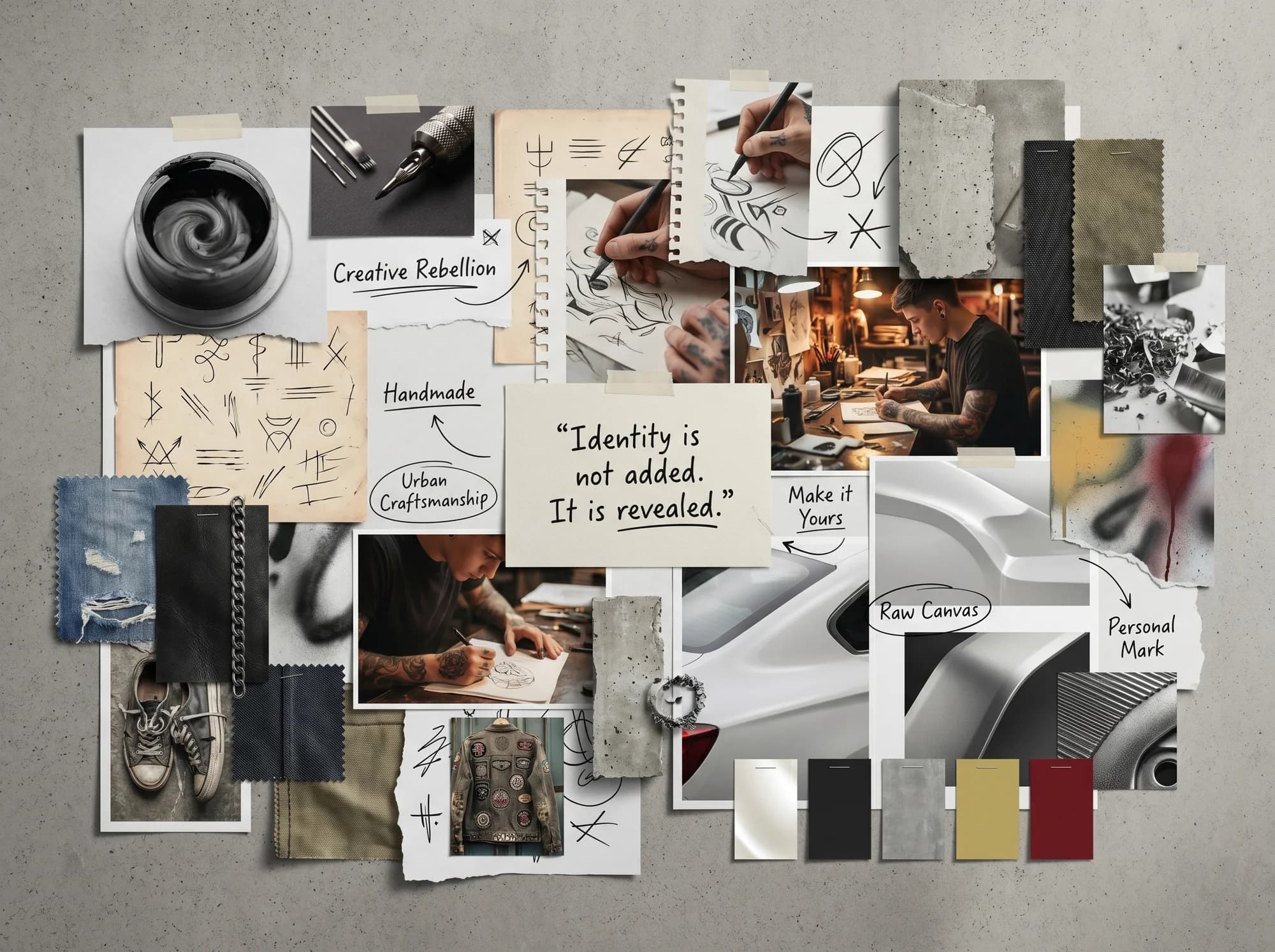
The idea and the obstacle
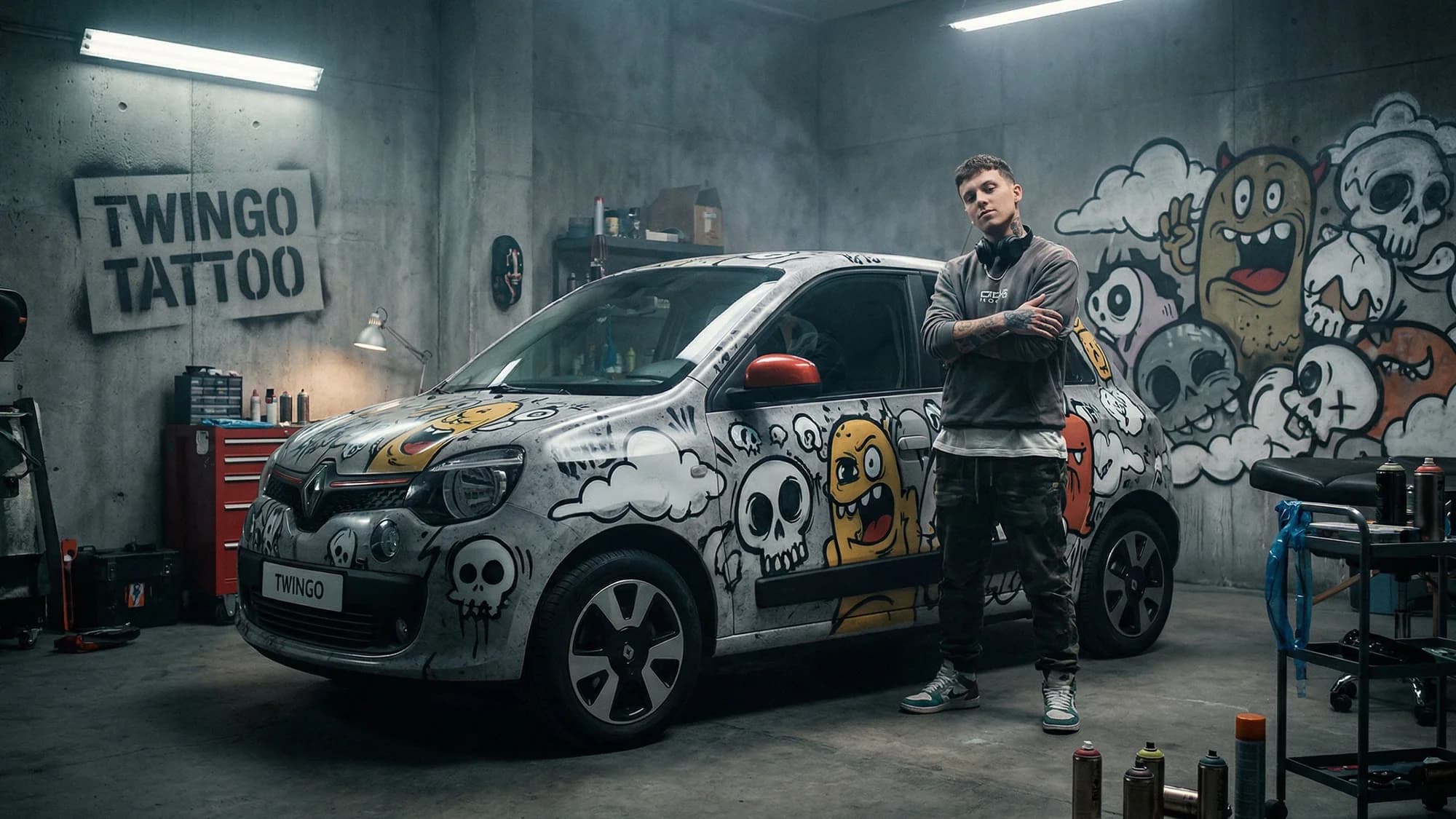
The car is treated as skin, a blank surface for expression. The visual borrows directly from tattoo flash art: bold outlines, flat colour fills, the grammar of custom culture applied to sheet metal. No gradients. No photorealism. Just line and fill, like a flash sheet on a wall.
The metaphor lands on its own. You make a car your own the same way you make your body your own. So the hero frame catches a pristine white Twingo mid-application, the wrap going on like ink, one panel at a time.
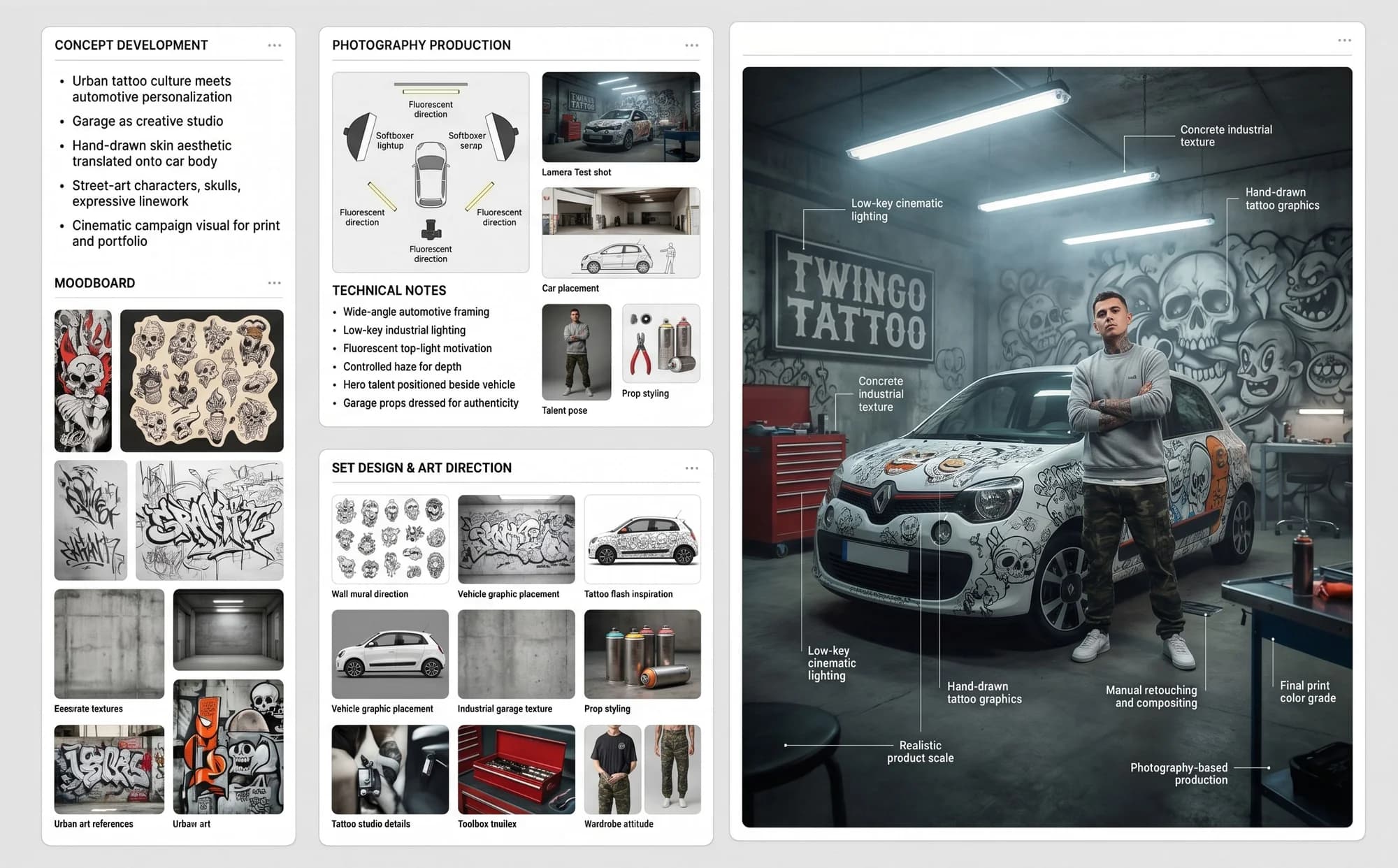
Needle to Metal.
The base was a real Twingo, shot on a green infinity cove under controlled studio light. A pure white car was chosen to maximise legibility for the overlay, and that clean plate with its reference lighting became the foundation everything else was built onto.
The tattoo flash artwork was built as vector in Illustrator (skulls, monsters, clouds, bold-line flash-art vocabulary), then projection-mapped onto the bodywork rather than dropped as a flat decal. Following the panel curvature and gaps in post is what makes it read as physically applied, not pasted on.
Layer Decomposition
- Base plate
- Real Twingo photo: white body, clean studio light, no overlay; foundation for everything above.
- Light & shadow
- Highlight and shadow detail lifted from the plate to shape the panels under the art.
- Contact shadow
- Panel gap and crease detail at ~40% to ground the flash art to the surface.
- Tattoo overlay
- Vector flash art projection-mapped to the body: skulls, monsters, cloud fills following each panel.
- Background plate
- Green infinity cove plate, shallow depth of field: matches the set photography.
- Grade layer
- Grade: contrast pull, highlight protection, warm offset to push the flash-art palette.
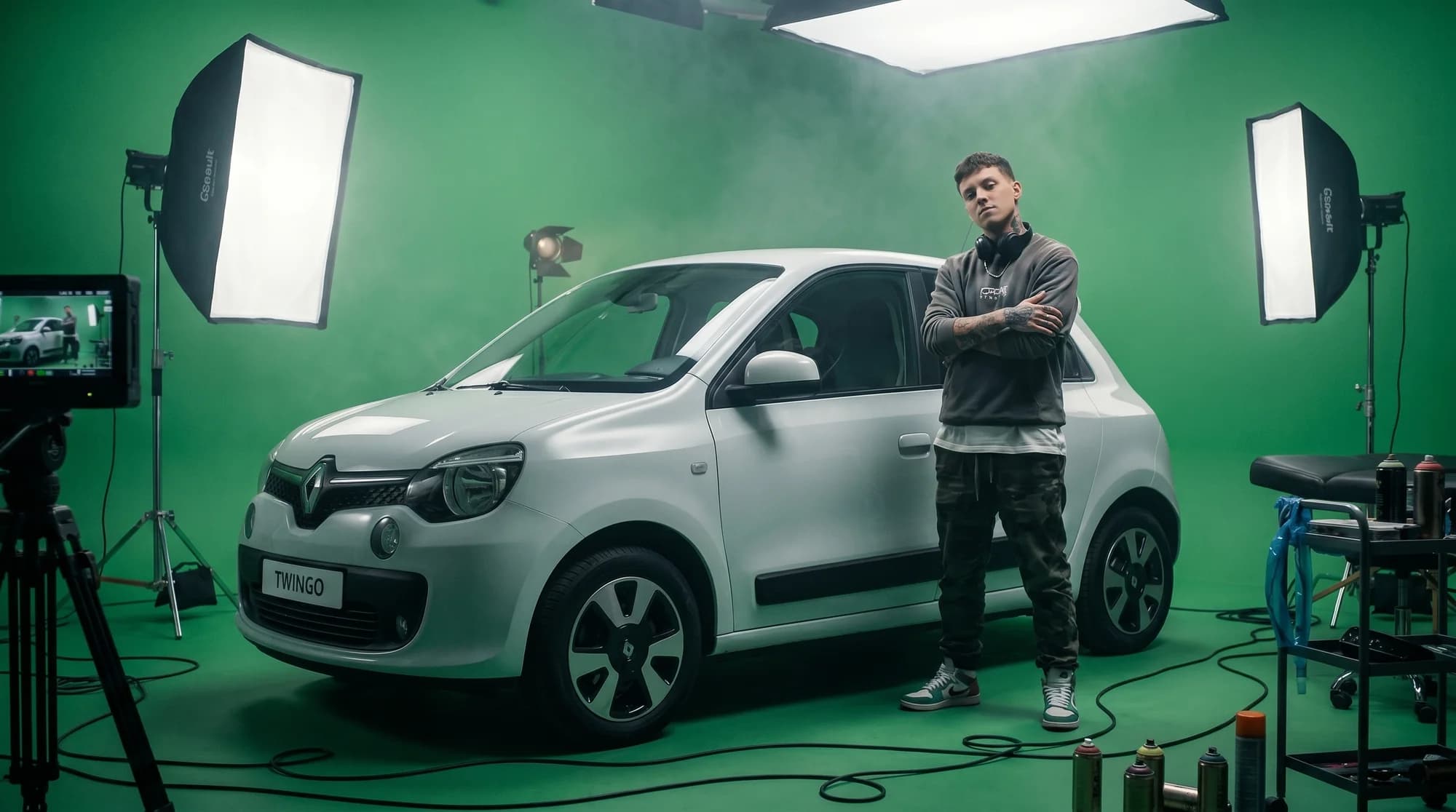
Final Output
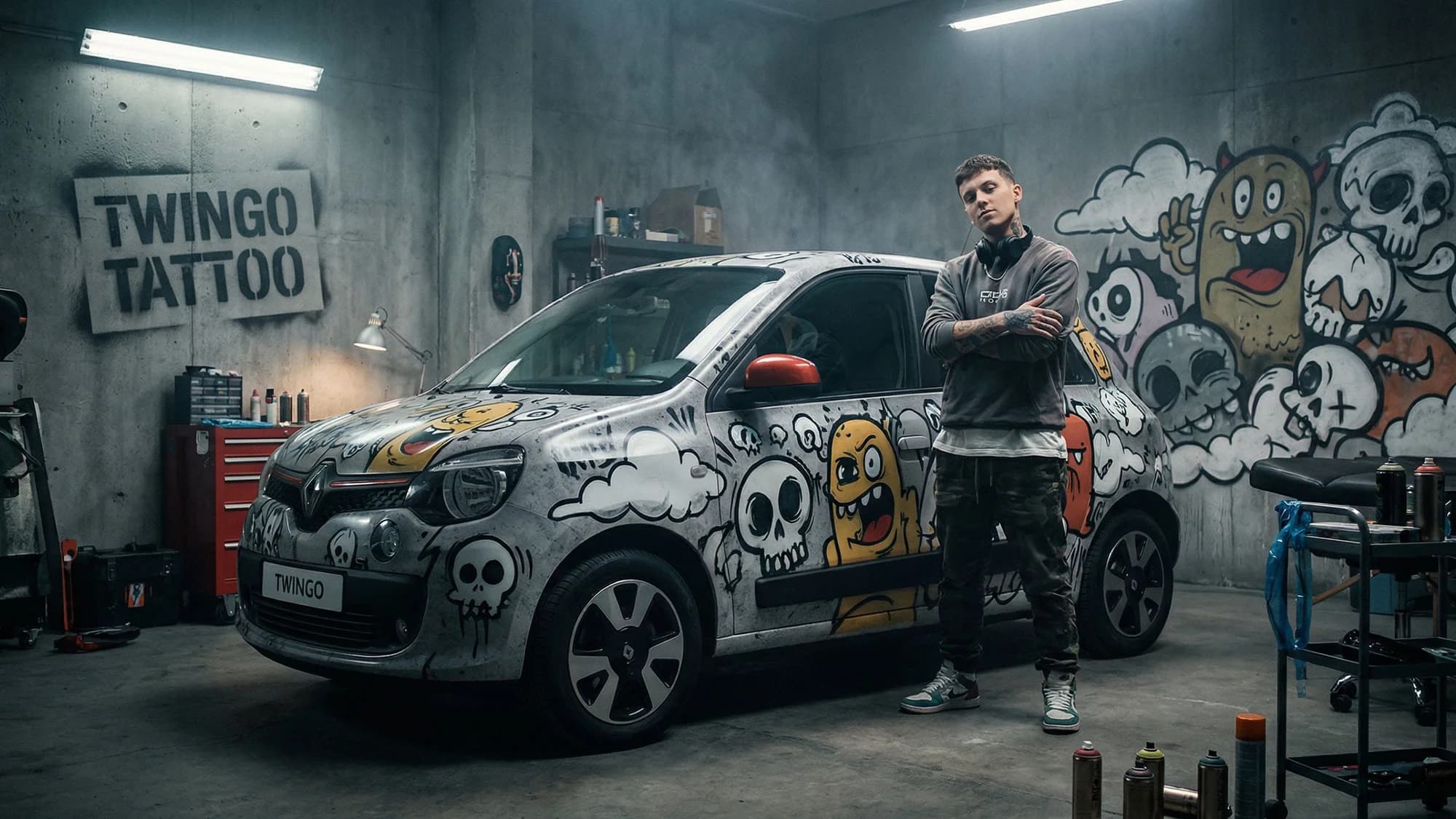
- Technique
- Real-car base plate with vector flash art projection-mapped to the bodywork follows panel curvature and gaps, not a flat decal.
- Output
- Layered photo composite base plate, overlay, light/shadow and grade passes recombined for full control in post.
- Metaphor
- Car-as-skin; customisation as personal expression